


One of my favorite things about working with Pain Reprocessing Therapy clients is how quickly improvement can happen. Clients routinely share real shifts in their pain & symptoms in the first few sessions. Then…the work begins. Ups & downs with symptoms happen. Flares & setbacks come along. Or the pain gets better but just hasn't quite gone away yet. Cue the frustration! When we hit that frustration, it most definitely doesn’t feel good, and many of us stop there because we really don’t like that feeling. Read on here — you’re about to learn why feeling frustrated is the exact thing we need to teach our nervous systems something new.
When you’re searching for a solution to chronic pain, undoubtedly your feed fills with tales promising "5 steps to solving your chronic pain" or "with this program I solved my pain in 3 sessions!" That type of messaging is really enticing, especially when we've been in pain for months, years, or even decades. So it's really tempting to set our expectations of healing to align with those fast-results stories. Those stories don’t sync with the reality of healing for most people though, and the quick solution we’re hoping for gives way to what you really need in order to heal.
Many, many times over my years working with folks in pain (going wayyy back to 2008 now!), I've had clients come into sessions and pepper me with questions about a pain episode they've experienced since our last meeting. For a long time I tried to figure those things out, there must be something going on! But time and again, based on my own experience with my body and by working with hundreds and hundreds of people over the years, I've come to learn this simple truth: Bodies just do weird shit sometimes. And most of the time, it's not a big deal. Read on to learn more and discover some simple tools you can use to reduce the uncertainty that goes with random pain episodes.
Returning to movement and activity while recovering from pain can feel extremely high stakes. And it's often laced with advice, guidance & prescribed routines from professionals like PTs or physios, as well as fear, frustration, uncertainty and a host of other emotions. To recover from chronic pain, finding safety, ease, and even playfulness & laughter are incredibly important. What’s a shortcut to get there? An exploratory mindset when you move. Read on to learn exactly what an exploratory mindset is, how to cultivate one, and how it can help you in your pain recovery journey.
Your brain is constantly trying to make life easier for you. It does this by predicting what’s about to happen -- what you'll feel (including pain!), see, hear, and need -- so you don’t have to consciously process everything in real time. This creates efficiency in the nervous system, which our brains really like as a way to get through our day-to-day lives. Sometimes though, the brain gets these predictions wrong, especially when it comes to chronic neuroplastic pain. So how can you help your brain overcome this largely subconscious process? Read on to learn six key ways to rewire your brain’s pain predictions.
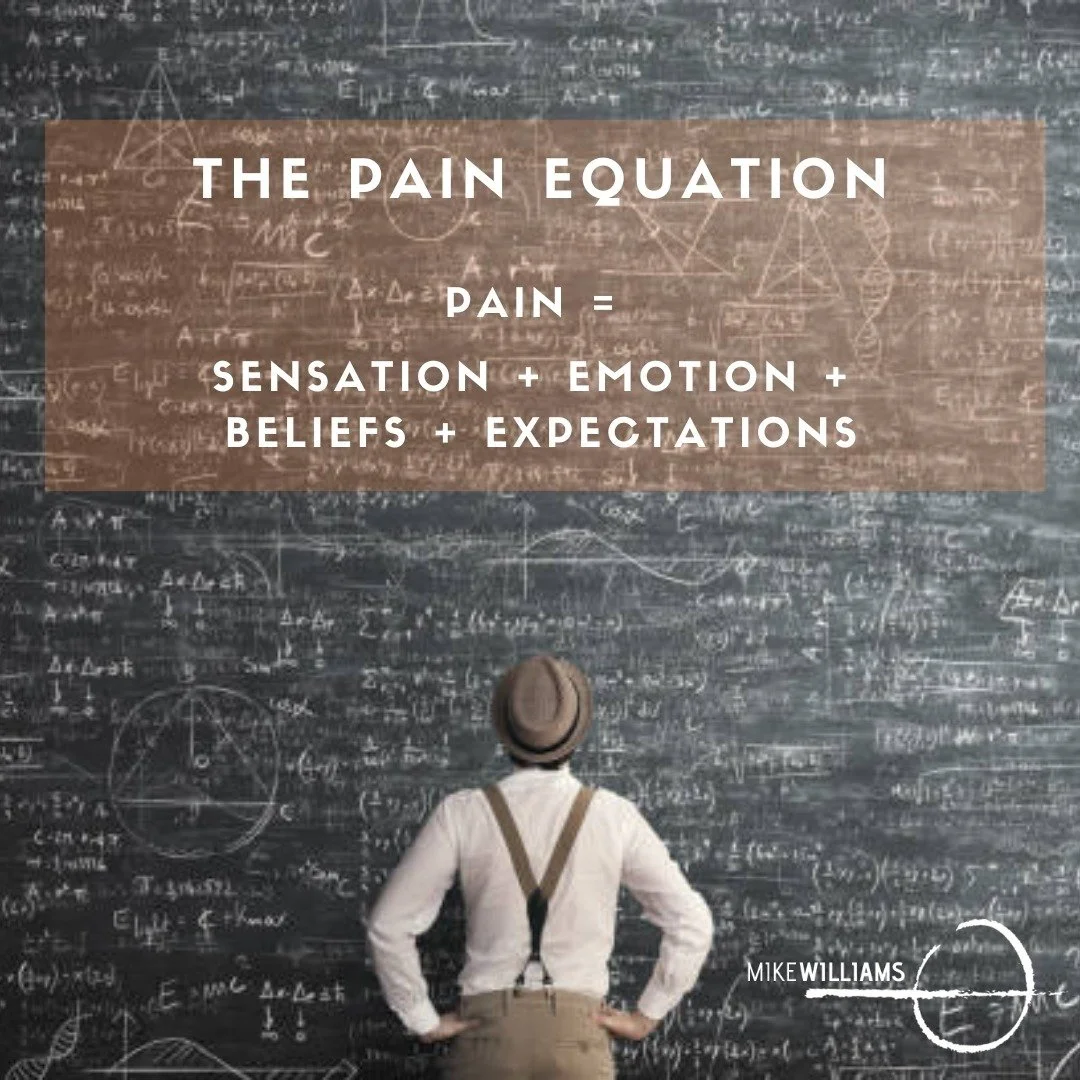
Imagine your brain not as a passive observer of reality, but as a prediction machine -- constantly making its best guess about what’s happening in your body and environment, and adjusting based on those guesses. Emotions and sensations like pain aren’t hardwired reactions that live in specific parts of your brain like we've long assumed. Instead, they’re constructed experiences. Your brain draws on your past history, context, and sensory input to make meaning and experience, and pain is one of those experiences. Keep reading to learn more about what leading-edge neuroscience has taught us about how the brain creates pain.
Working to create more space & ease from pain or challenging emotions? Slow down, tune into your body & mind, and get to know the little details about what you’re experiencing in the moment. When you slow down in mindfulness and get into the granular details of your experience, the activity of two important neural networks shifts significantly, helping your nervous system move from “fight or flight” to “rest & digest.” Learn more here about how a specific mindfulness practice can turn down the volume on intense feelings, and the neuroscience behind why it works so well.








On the path to healing chronic pain, sometimes our brains will mess with us. In fact, it’s a feature of our biology — when our situations change for the better, our brains have the habit of redefining what it classifies as a "problem." We instinctively move the goalposts, which can mask that things are, in fact, improving. The same applies for solving chronic pain & other symptoms, and so part of recovery will be to overcome your brain's built-in biases (we all have 'em!) that work to keep our perceptions basically the same over time. Read on to learn more about this feature of our brains and how to help your perception shift in the right direction.